Starmer’s State

An embattled Labour prime minister sits, hunched at his desk. Ruefully he peruses through legions of figures. Standing shoulder to shoulder, they spell out the need for further tax rises and spending reductions if he is to right a creaking ship, threatening to sink beneath the waves. A charisma deficit at the heart of No10, oxymoronic messaging, and the creeping realisation that the government came to power lacking a genuine political soul, looms over Downing Street.
The year is 2009, Gordon Brown, a figure of stability and dour competence, has been repeatedly blown to all four corners of the globe by the headwinds of global financial entropy. In a last-ditch attempt to find his footing amidst an increasingly hostile domestic environment, and with big cabinet beasts circling, he has turned to the promise of constitutional reform. It will usher in a new type of politics, in recognition of the earth-shattering consequences of the financial crisis, and the growing apathy and revulsion directed toward elected officials in the wake of the expenses scandal.
An elected second chamber, the empowering of the commons on declarations of war, and a referendum on electoral reform, failed to see the light of day. Too little too late. A deteriorating economic landscape and turgid personal ratings ensured that Brown, and New Labour, were dragged from office in 2010, ushering in Austerity and doctrinal knife fights over Europe and the politics of migration.
Fifteen years on, and the rhyming couplet of history has closed. Rachel Reeves is set to announce a new swathe of tax rises, offering cover for a bond market, jittering at monthly borrowing figures. The Prime minister, Sir Keir Starmer, is politically mute, dutifully outsourcing the voice of Starmerism to friends and allies, while he is buffeted by international inflection points beyond the power of the British state.
From the present vantage point, history appears to be against the PM. The forces set loose by Brown’s defeat, now stand firmly behind Nigel Farage, a kind of man of destiny, nihilistically agitating against the established party system. In the face of this kind of upheaval, Starmer must be both braver, and more decisive than Brown. His most impactful political tools- rocketing growth and plummeting migration statistics- are, for now, entrusted to Rachel Reeves and Shabana Mahmood. Instead, Starmer must don a white coat, tousle his hair, and take the toolbox of the constitution under the hood of the British state.
Without delay, the PM must face down the ‘crisis of legitimacy’ rumbling towards the two major parties at the next election. Thanks to the majoritarianism and stability-stability-stability programming of First Past the Post, a decline in vote share and ideological loyalty has produced splutteringly little change on the electoral map. In part, this explains the total collapse in confidence that Starmer’s premiership has experienced.
The electoral algebra of the ‘Ming Vase’ strategy, always lacked the soul necessary to capture hearts and minds in trying times, and with Reform potentially falling short of an outright majority, the UK could be left with not only a parliament, but a political nation, nye ungovernable. Like Brexit, a cry for change is once again skewered by the workings of FPTP. This gives way to internecine parliamentary warfare (assuming coalition with a Tory rump) and very little progress fiscally, industrially, or on the world stage.
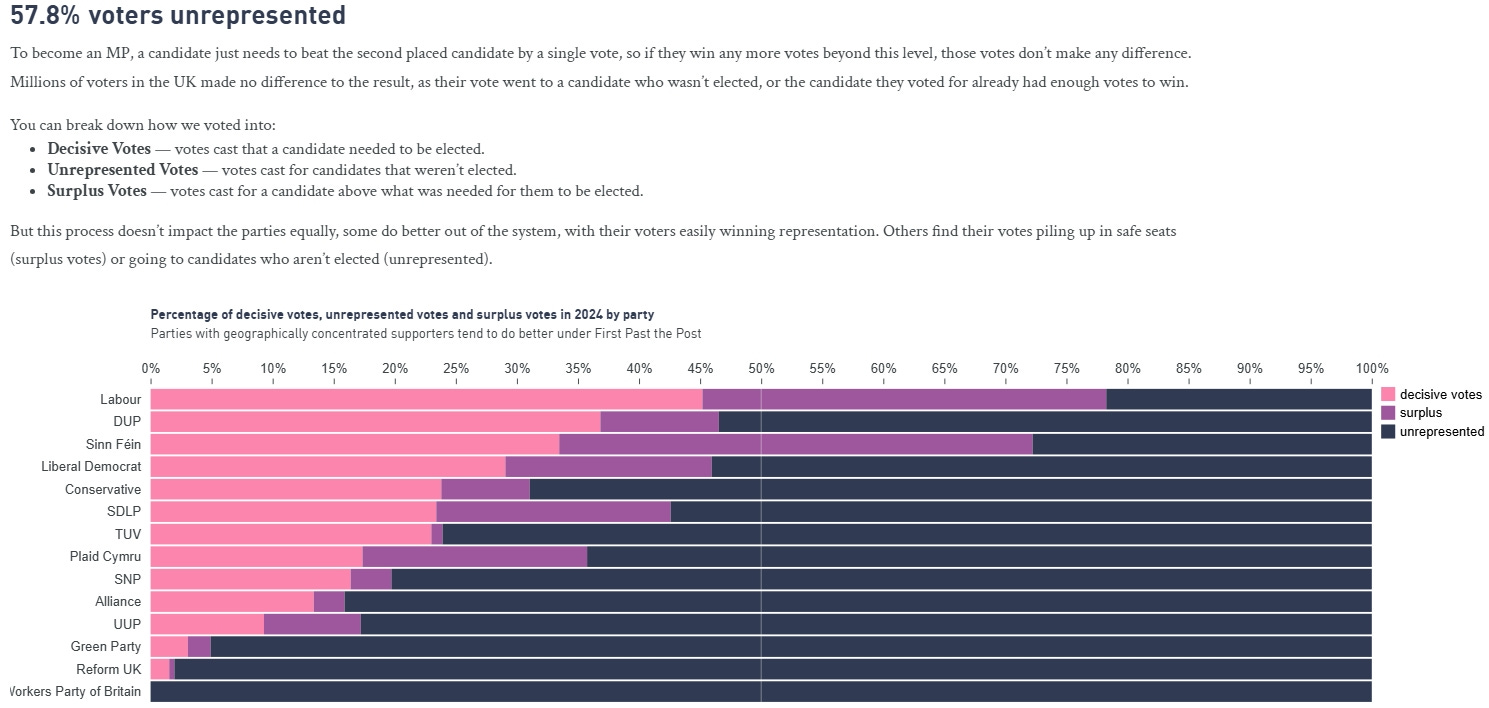
Most would wager that this is a convulsion best avoided. The political right in this country has always operated under highlander rules. Victory is singular and absolute, with the prize being a vice like grip over the electoral system.
Despite sustained Conservative success, total vote share and political energy in this country resides left of centre. The introduction of a PR system bestows consequence upon grass roots engagement, which, if harnessed to a curated social media campaign (see Zohran Mamdani), can offer radical alternatives to our rusting duopoly.
Policy making and political procedure will be dragged out of the shadow channels of the party machine, with cross-party policy becoming more discursive. No longer would the Green or Liberal Democrat manifesto be an intellectual plaything for policy wonks and geeky columns. Instead, they become guarantors for local and national concerns. Voters can settle on key policies from differing political traditions, rather than bedding down with a government through dimly remembered slogans and a manifesto introduction.
A muscular Gaza policy, further alignment with the European single market, and the political will necessary to reform welfare and the NHS. Surely a Frankenstein’s wish-list for undecided leftists at the last election? Such priorities can, and will converge as the price extracted by the centre and left for sensible, compassionate coalition. Simultaneously, it nudges the Tories onto new, less toxic pasture, as fighting Reform for the same proportional patch is nothing short of political seppuku.
MP’s riding the razor edge of electoral plurality will of course point to the politics of the Netherlands and Germany. The Growth of the AFD and PVV has been under PR’s watch. Reform is at best cosmetic, an undercooked think tank favourite detached from the priorities of working people. The referendum it would require would generate further division. Of course they’re not wrong. Electoral reform is neither miracle cure nor permanent settlement, with every successful experiment calcifying under the eventual weight of material change. It’s an adrenaline shot, for a unique and faltering British system that cannot be reduced to sociological archetypes.
Next up, is the low hanging, rotting fruit that is His Majesty’s ministerial cabinet. Like the Royal family, it’s antiquated by design. Its set-up reflects a corpsed world, governed by a senatorial oligarchy, committed to the pursuit of Virtu and ranked according to Primus Inter Pares. It’s the world of Pitt the Younger, Lord Liverpool and the Duke of Wellington, not men of the commons in any sense. For these patricians, the preservation of their order meant dutiful government.
With notable Etonian exceptions, these venal fictions have crumbled. Yet, its cabinet bones have eluded immurement. It haunts the state through the ministerial merry-go-round (the average lifespan for a post-2010 cabinet minister is 636.4 days). The English gentleman amateur is parachuted into a hulking department of state, armed with nothing but a PPE degree and three years of cabinet entitlements. Its aristocratic chortle can be heard in the sideways placation of Yvette Cooper, leaving Starmer open to pursue a more aggressive migration policy without slight, as though the Foreign Secretary were sitting atop vital rotten boroughs.
As an avowed sceptic of the Westminster pantomime, and another PM in an apostolic line of Whitehall hawks, Starmer seems suited to a barebones examination of the Ministerial system. His repudiation of Brexit, Austerity, and acrid contempt for Boris Johnson and Liz Truss, demonstrate his opposition to the chronic short termism and the bluffers and duffers that Westminster seems to birth. Reform’s Zia Yhusuf is on the record as wanting to move toward external appointees, while Starmer’s appointment of James Thimpson suggests the same festering ambitions.
As so often is the case, events have punted Starmer back to the world of cabinet management and the media rollercoaster of reshuffles. But for a supposed HR manager, Starmer doesn’t relish these workplace tribunals. He should trust his gut, and commission a review of the cabinet system, instead of trying technocracy without the technocrats, or talking up stability, while empowering ministers in hoc with razor thin majorities. True accountability lies in the complete ownership of policy, its authorship and delivery. Who takes ownership for HS2? Nuclear underinvestment? Potemkin aircraft carriers? Pandemic modelling?
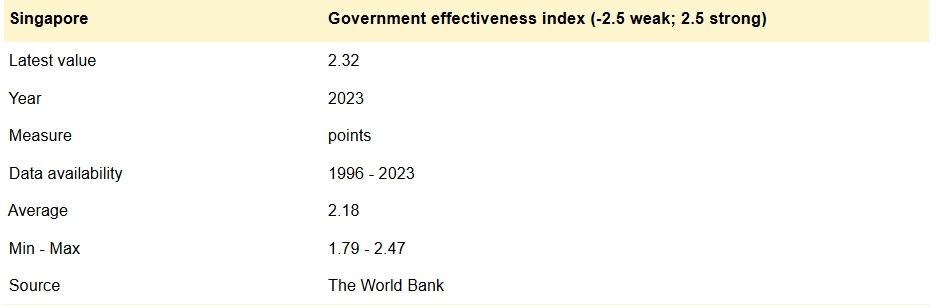
World Bank Singapore assessment
The value of the MP system lies in its locality. Its reception to popular feeling through those all-important constituency surgeries that keeps our politics, and politicians, human. In blurring the legislature with the executive, we leave our representatives cross-eyed, trying to ride two horses at once, in what must seem to the Chinese Politburo and the US cabinet, as a circus devoid of strategy, that even LBJ would not condone.
The final piece of this puzzle is continuity Brown, with the 2024 manifesto commitment to House of Lords reform spearheaded by the former PM. Brown’s commission settles on an elected second chamber of the nations and regions, designed to shift power, policy and economic opportunity out of Westminster, through constitutionally enshrined consultive powers. This chamber would cycle separately to the commons, remaining a chamber of scrutiny, not legislative activity.
This drive for devolution needs muscles. Brown suggests that delivery be financed by a repurposed infrastructure bank and a renamed British regional investment bank, armed with targets to bridge the equity gap between the Southeast and the rest of the UK. A redesigned second chamber, with its eyes fixed firmly on unifying what the Centre of British Progress refers to as the ‘Parallel economy’, will direct this initiative. For a Prime Minister who lives and dies by the hand of growth, ignoring the constitutional avenue has little upside.
Occasionally, the Lords exemplify a certain British idyll of polite debate, serving as a refreshing reminder of what genuine talent driven by a spirit of public service can produce. But certain exceptional servants are a slither of natural light, inside a damp, murky institution, where the stink of corruption only adds to the toxic fumes of anti-establishment rage. There is no nobility in Lord Lebedev or Baroness Mone.
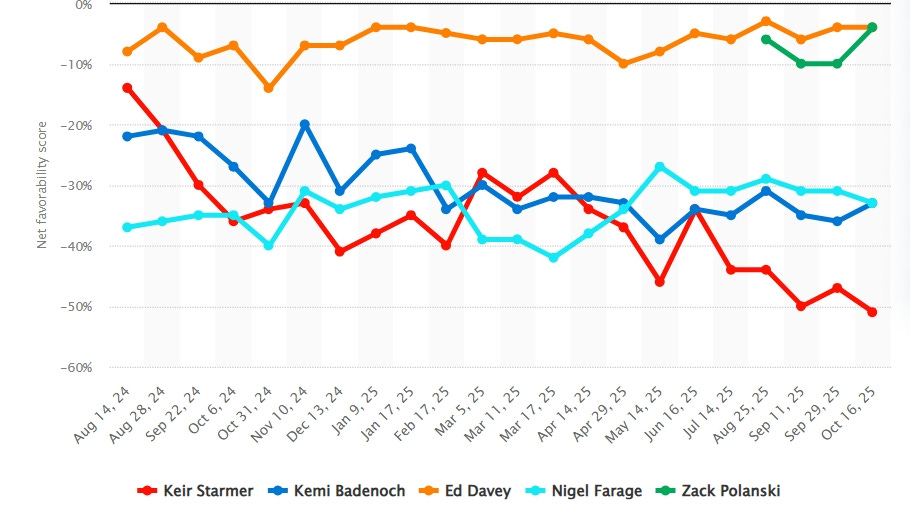
It is clear from the state of the polls what Starmer’s government will be judged on in 2029. He knows he’s in the fight of his life and has settled on ammunition. Constitutional reform is cheap, and the mandate received in 2024 was for change and nothing less.